THOUGHT-DRIVEN INDEPENDENCE FOR WHEELCHAIR USERS
Wheelchair users face difficulties such as navigating indoor spaces, remembering paths outdoors, and reaching or identifying items while shopping. These issues stem from limitations like low memory, impaired vision, and restricted mobility.
Solution
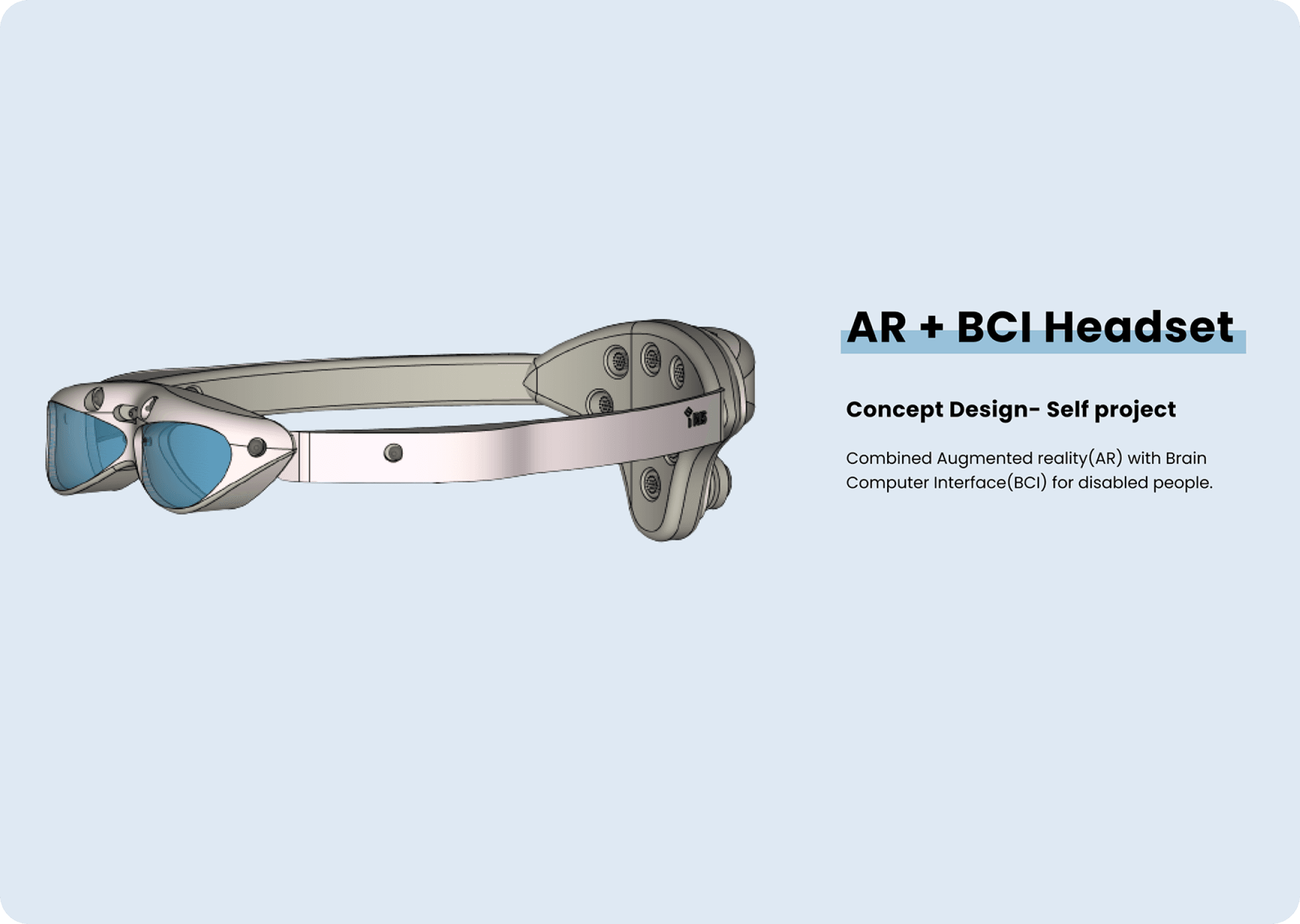
Integrating Brain-Computer Interface (BCI) with AR headsets can address these needs by enabling users to interact with their environment using thought-driven commands. The AR overlay can assist in object recognition, navigation, and making informed choices, enhancing independence and improving overall quality of life.
WHAT I EXPLORED
Background Research
Use of AR
AR will overlay visual information onto the user's real-world environment, enhancing experiences by providing contextual data such as directions, object identification, or location-based cues. This capability will allow users to interact with their surroundings more intuitively and efficiently, especially in navigation or complex task environments.
Signals and BCI Integration
Event-Related Potentials (ERP), which are specific brain signals generated in response to stimuli. An ERP-based BCI enables the headset to interpret user intentions or commands directly from neural activity, serving as a hands-free input device.
Types and Position of Electrodes
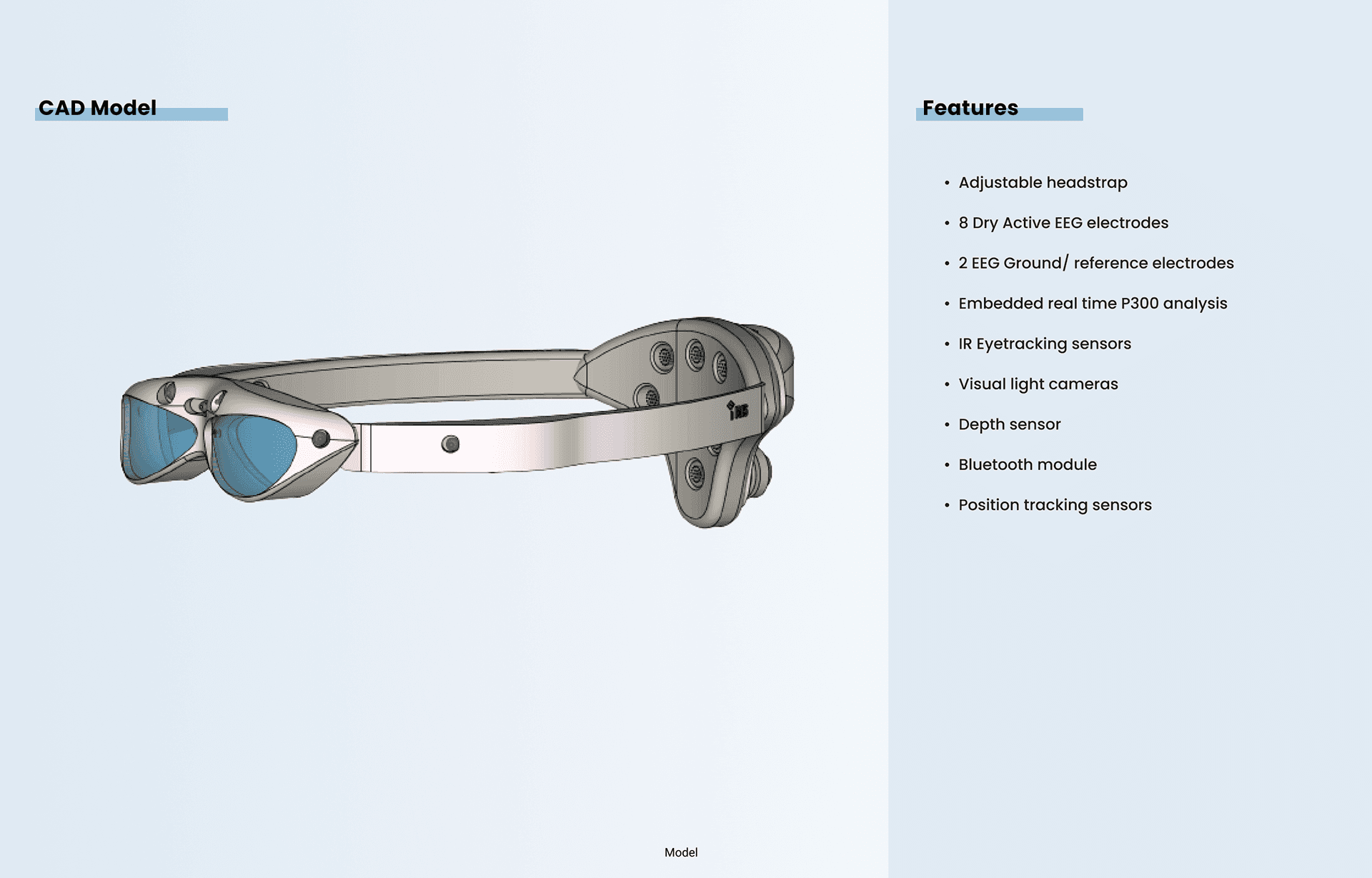
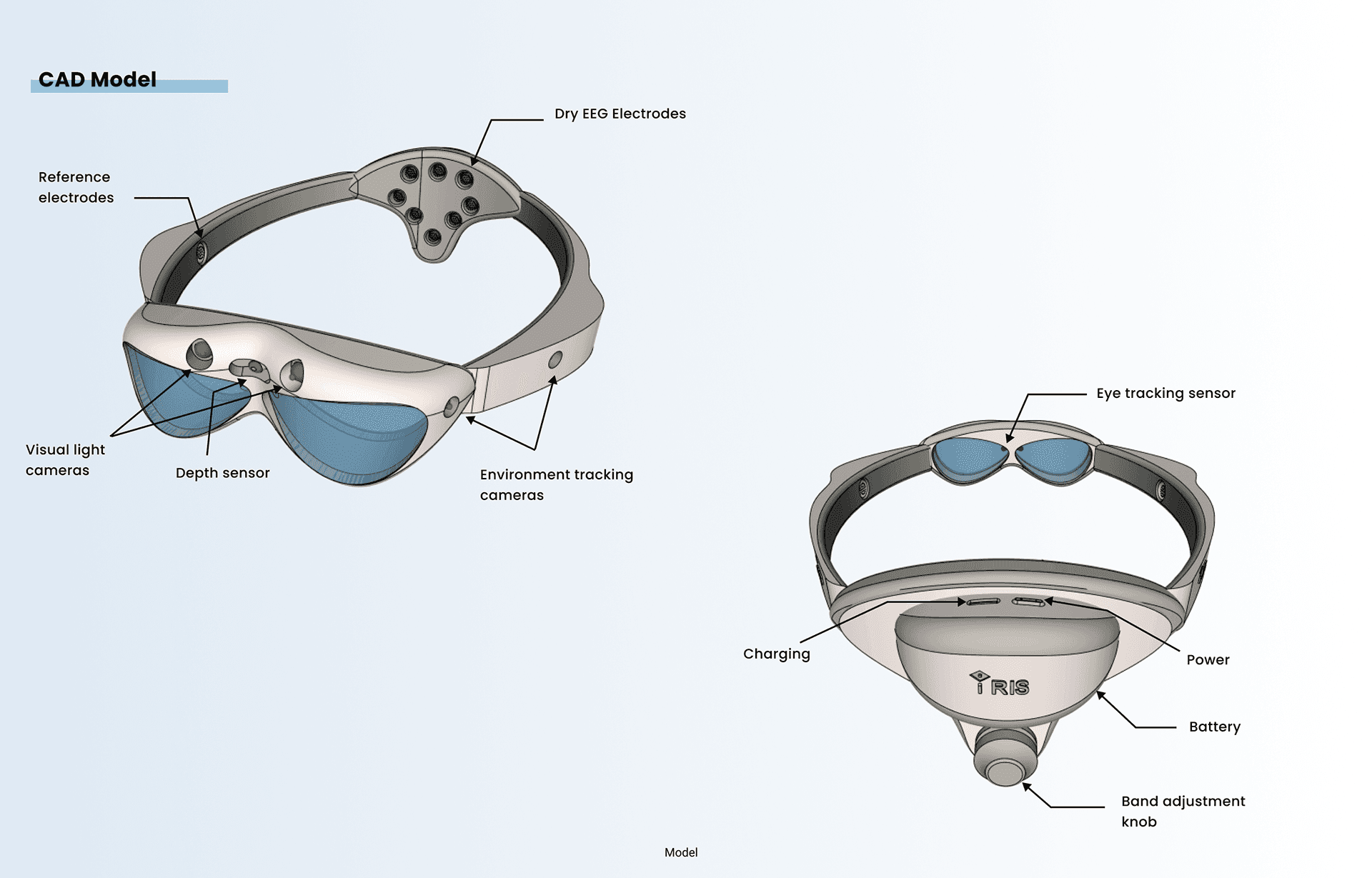
The solution employs novel active comb-shaped dry electrodes for EEG signal acquisition. These electrodes are designed to provide high signal quality while minimizing artifacts, ensuring reliable brain signal interpretation.
For optimal performance, electrodes are strategically placed over the visual cortex (positions such as PO7, PO8, Oz, Pz, P3, P4, O1, O2). This placement targets brain regions most responsive to visual and AR stimuli, enhancing the accuracy and responsiveness of the BCI system.
Conclusion
By fusing AR’s immersive visual overlays with BCI’s intuitive neural control, the solution enables seamless, context-aware interaction with digital information and real-world environments. This integration is particularly promising for applications in assistive technology, rehabilitation, hands-free navigation, and enhanced human-computer interaction.