MATHEMATICS MEETS ART & ARCHITECTURE
I took a transdisciplinary course, Crystal Flowers in Halls of Mirrors: Mathematics meets Art and Architecture, at Aalto University. The project was to design an art piece with new ways of combining mathematics with other fields like art, design, and engineering. To showcase art pieces, the exhibition was held at Heureka, the Finnish Science Center, Finland. The final output was a teamwork of 4 students from different departments and fields.
The art piece was later installed at the entrance of the Department of Computer Science building of Aalto University, recognized for its unique blend of computing, engineering, and mathematics, symbolizing the intersection of creativity and technology.
Art Construction
Artistic Inspiration
During prototyping, we became especially inspired by the following art piece, FAT CAR by Erwin Wurm. We liked the aliveness of the piece as well as the sort of gross looks of it.
Mathematical Inspiration
A cellular automaton is a discrete model that consists of a regular grid of cells in any dimension, where each of the cells is in one state of a given set of states, for example, active or inactive. Cellular automata are studied in many different fields, including mathematics, computer science, physics, theoretical biology, etc.
Biological Inspiration
It was inspired by different biological structures and shapes, Emergent phenomena, Natural formations and arrangements (geological, mineral, etc.), and the aesthetics of algorithmic evolution.
WHAT I EXPLORED
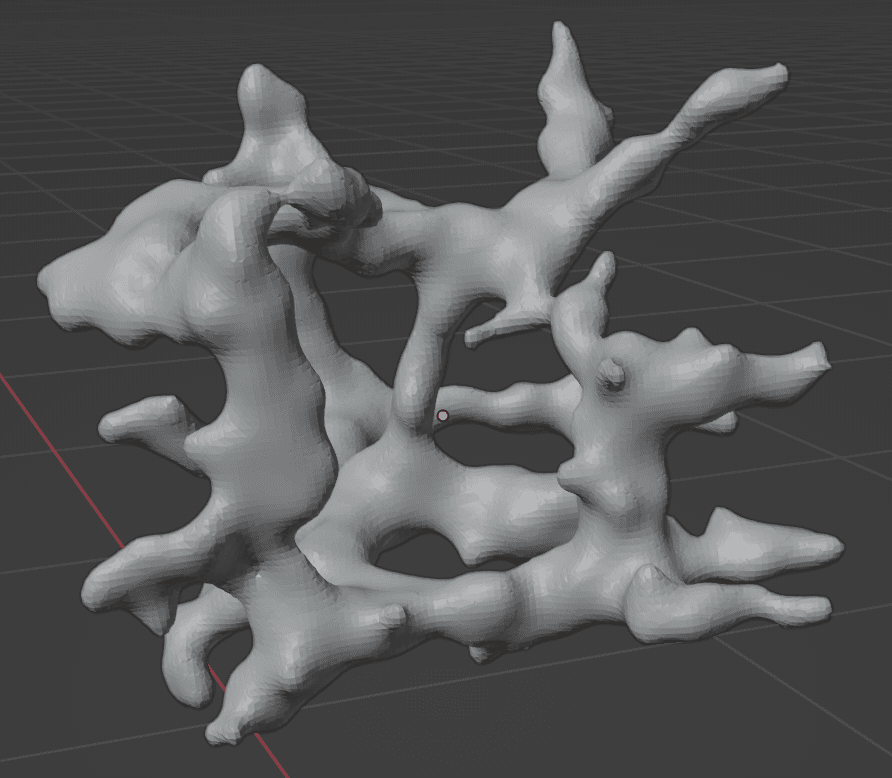
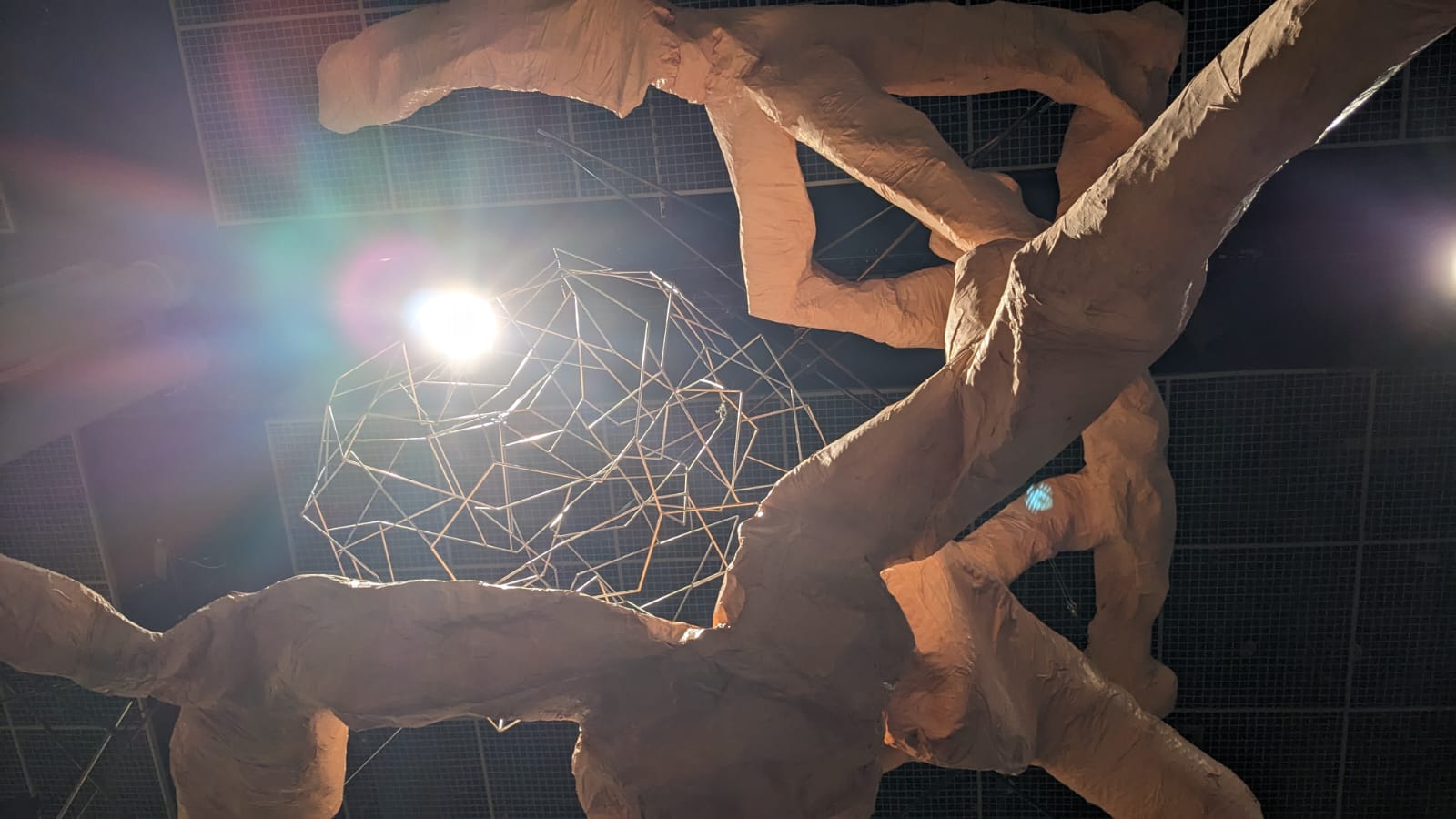
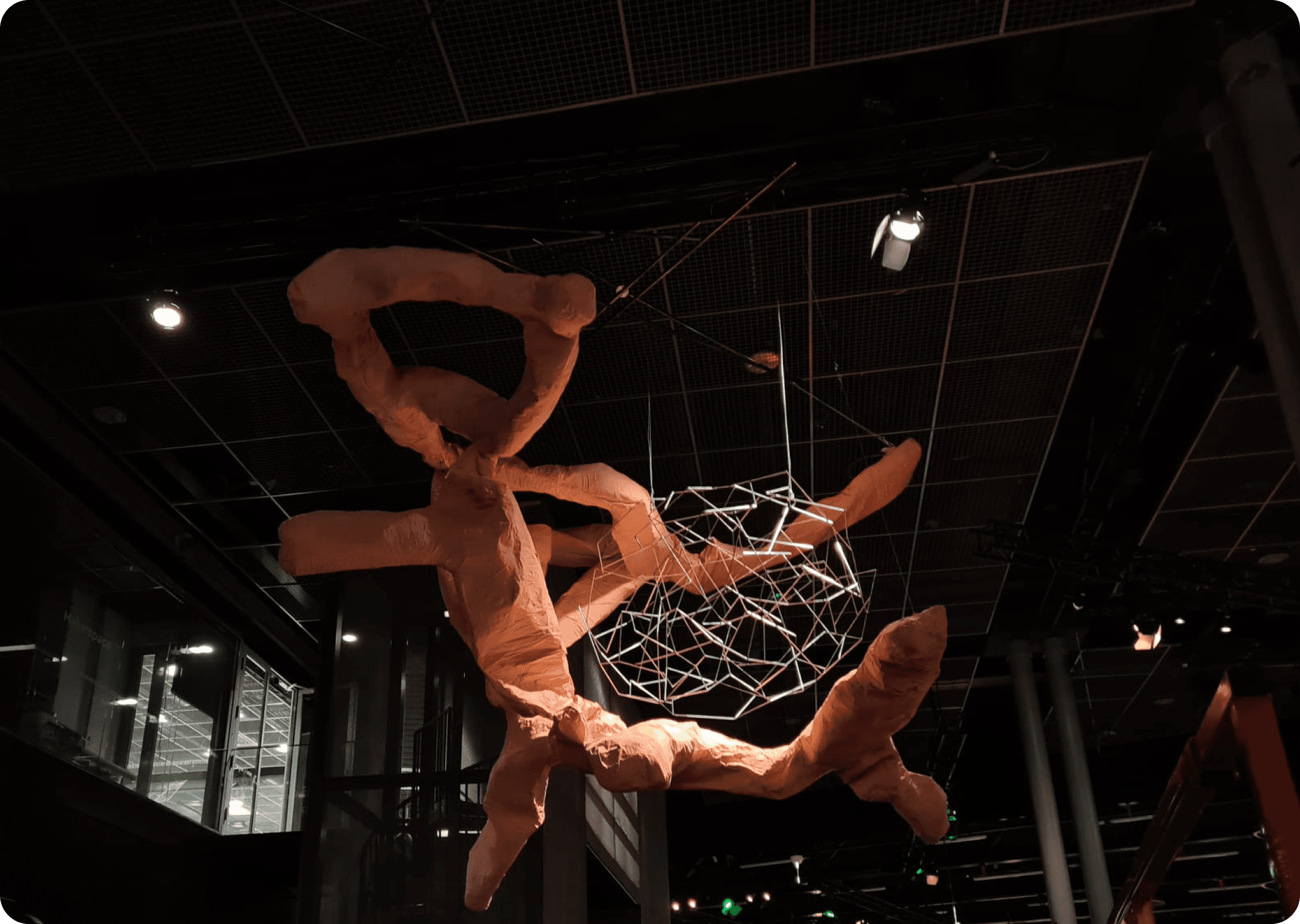
Ballad of Two Automata is a sculpture that manifests the perpetual dance of existence. Two cellular automations, constantly evolving, portray a silent drama of survival, their forms defined by a ceaseless search for resources and instinctual following of invisible pheromone trails.
The art piece consists of two parts: the outer pink part, called the hugger, and the inner metal part, called the virus. The hugger was made by welding an inner frame out of metal tubing, and then molding the shape out of chicken wire, which was then covered using a papier mache technique of layering strips of paper soaked in watered-down glue. This paper exterior was then painted with flesh color paint and covered with two layers of liquid latex, giving the piece a very skin-like and alive look and texture. Because of the large size of the piece, the hugger was made of six individual pieces, which were joined together on site at the exhibition. The virus was made by welding some 60 meters of stainless-steel rod together and polishing the piece at the end.