Serendip Gamified Learning Platform
Designing a gamified learning platform for the course on Sustainability.
Serendip Gamified Learning Platform
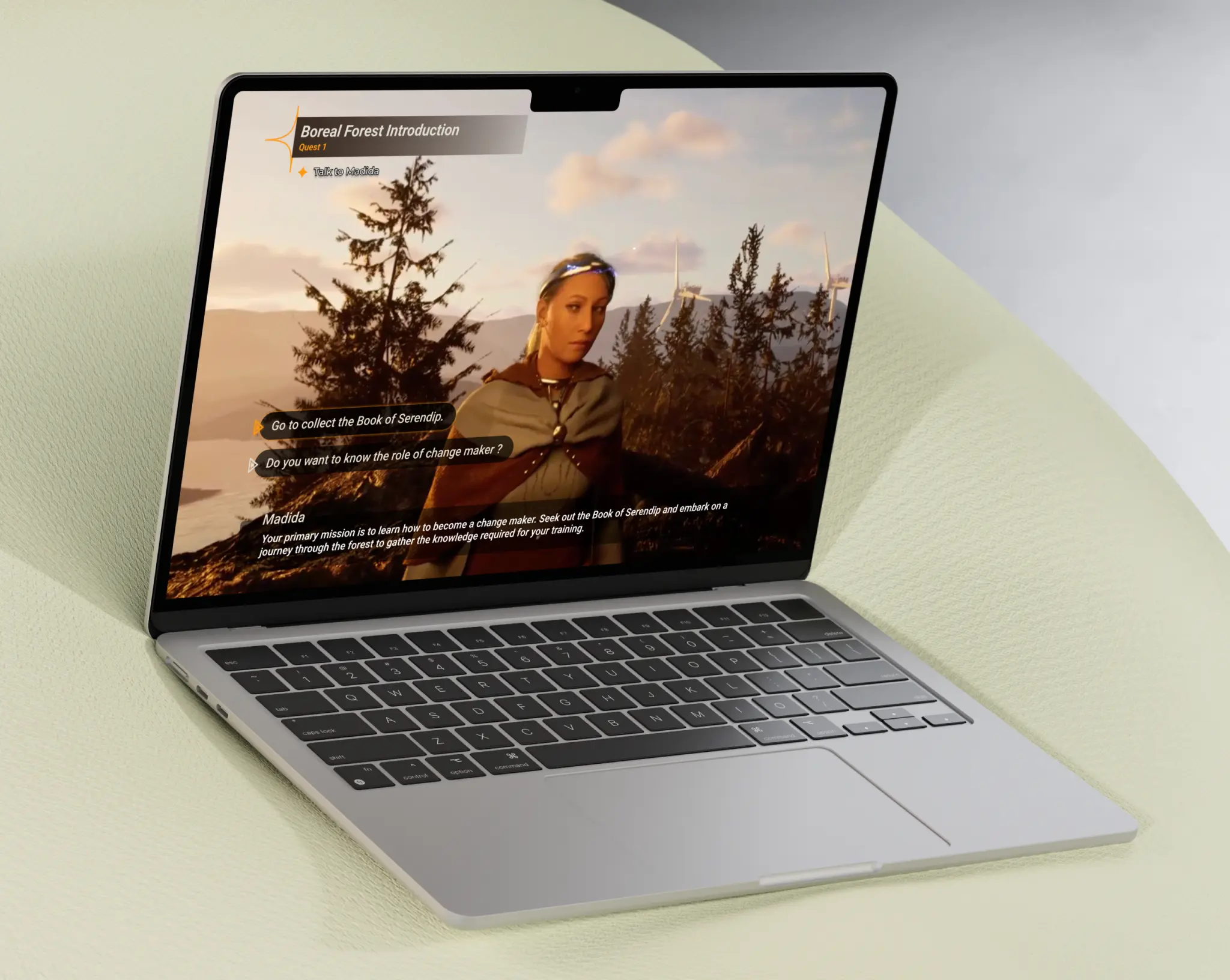
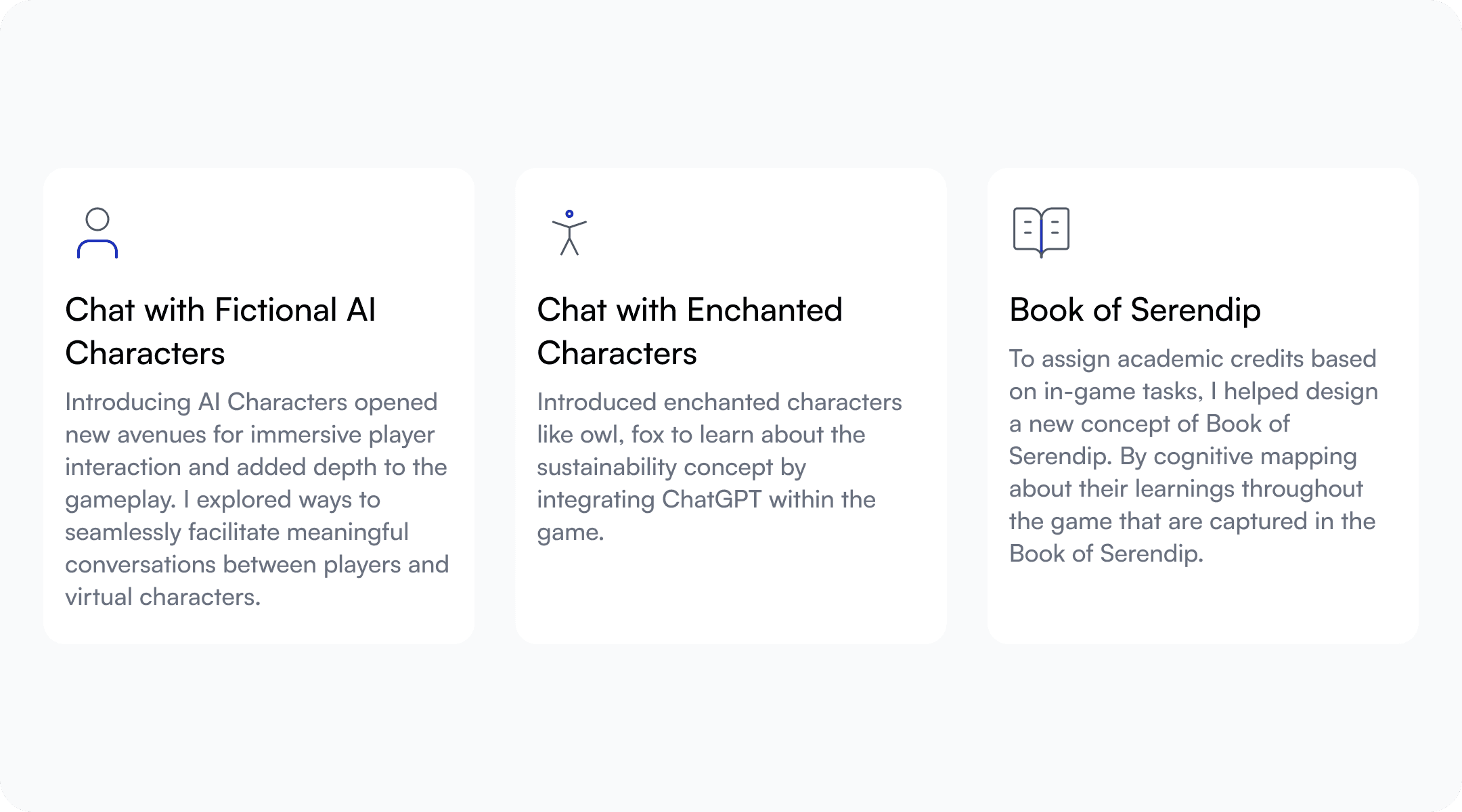
The Global Campus Project at the University of Helsinki planned to develop gamified learning platform for the course on sustainability. Serendip is an immersive virtual adventure learning platform to understand the complexity of sustainability problems. The game seamlessly blends educational content with immersive gameplay, fictional AI characters, information to discover and unique experiences in the adventure.
My Role
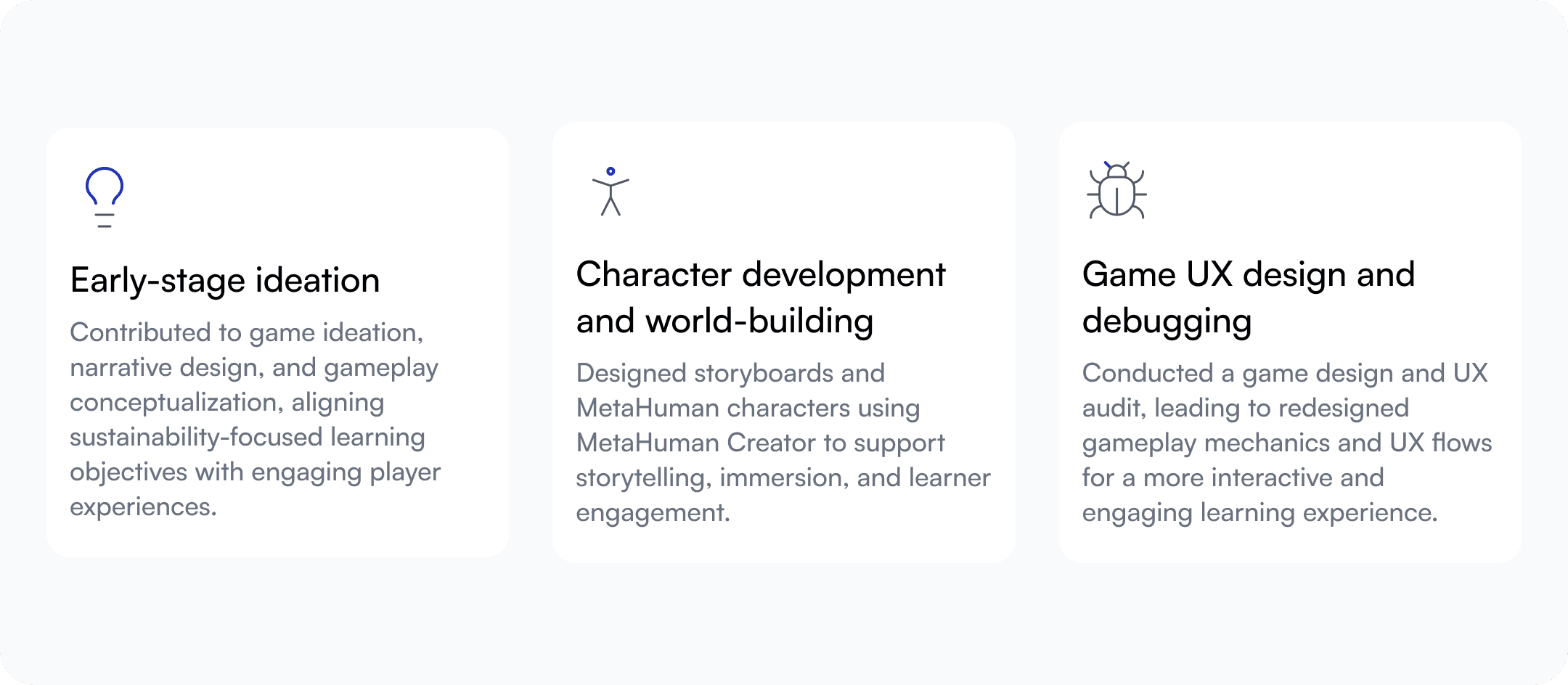
As a Game Design Intern at Serendip, I learned the fundamentals of game design, player engagement, and storytelling. Understanding sustainability concepts was essential for game design, so I studied the course content and syllabus to align gameplay with educational objectives. I contributed to ideation, character development, and gameplay conceptualization. I created storyboards, designed metahuman characters using MetaHuman Creator. Later, conducted a game design audit for Serendip, redesigning the UX and gameplay mechanics for a more engaging and interactive player experience.
Results & Impact
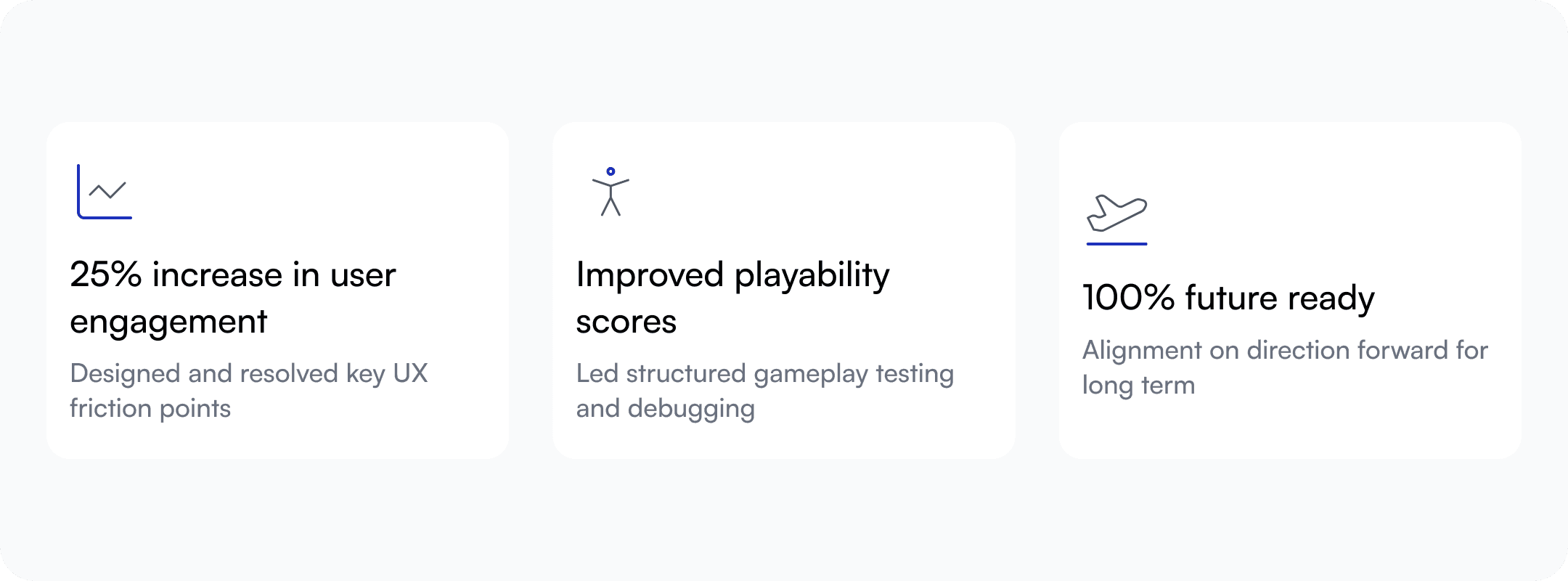
Identified and resolved critical UX friction points, redesigning game interface elements and HUD interactivity, which increased user engagement and session time by ~25% during playtests.
Conducted structured gameplay testing and debugging, delivering insights that directly informed product iteration and improved playability scores in user surveys by 30%.
Collaborated with educators and developers to align product design with learning outcomes, resulting in higher adoption by pilot schools and smoother onboarding for students.
Storyboard & Ideation
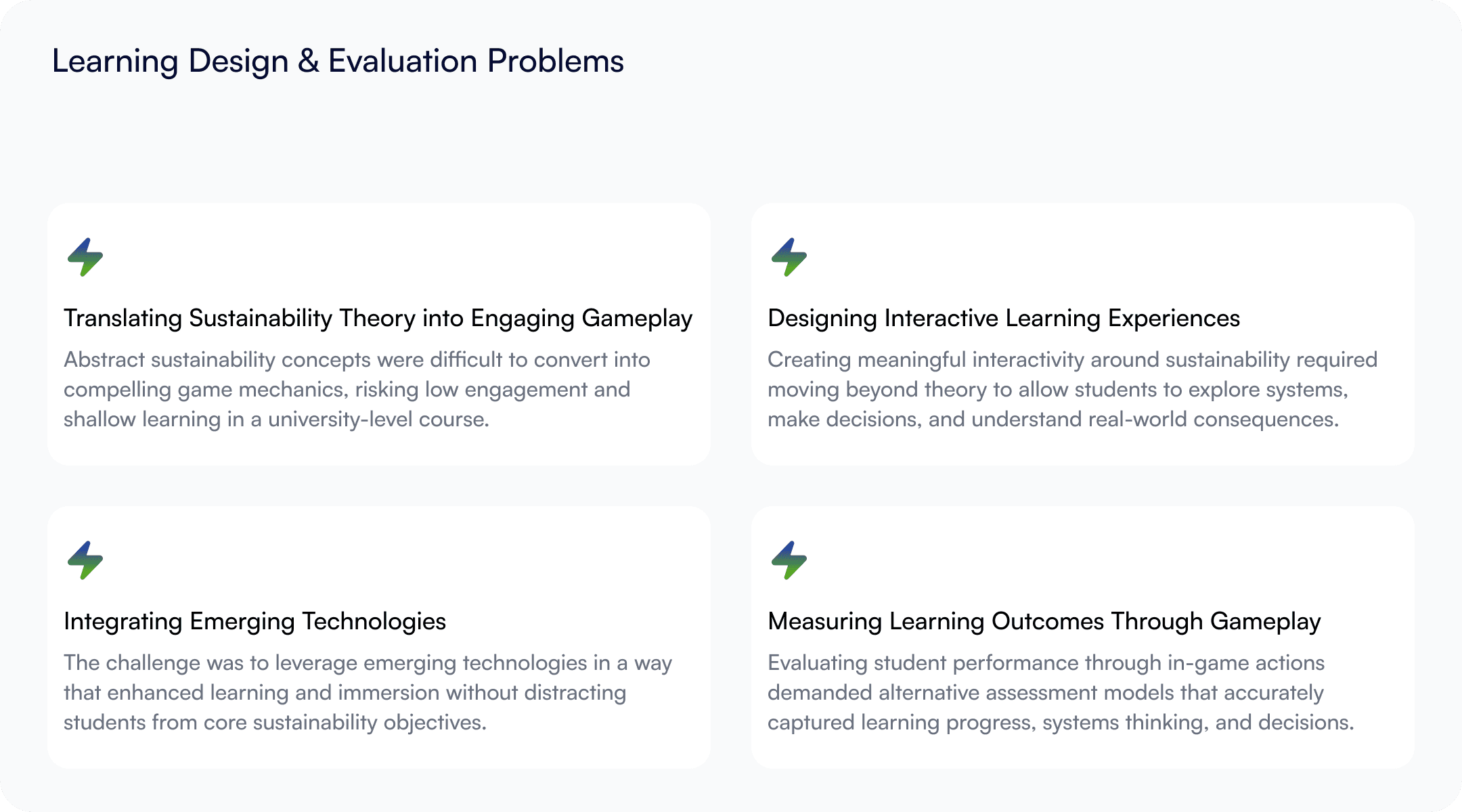
Collaborated with the game design team to generate innovative story ideas, envision gameplay mechanics, and develop engaging characters for the gaming platform. Translating conceptual ideas into visual narratives was important. I took charge of crafting game storyboard ideas and sketches. This involved translating abstract concepts into visual narratives, laying the foundation for the game's visual identity and progression.
What makes game narrative different?
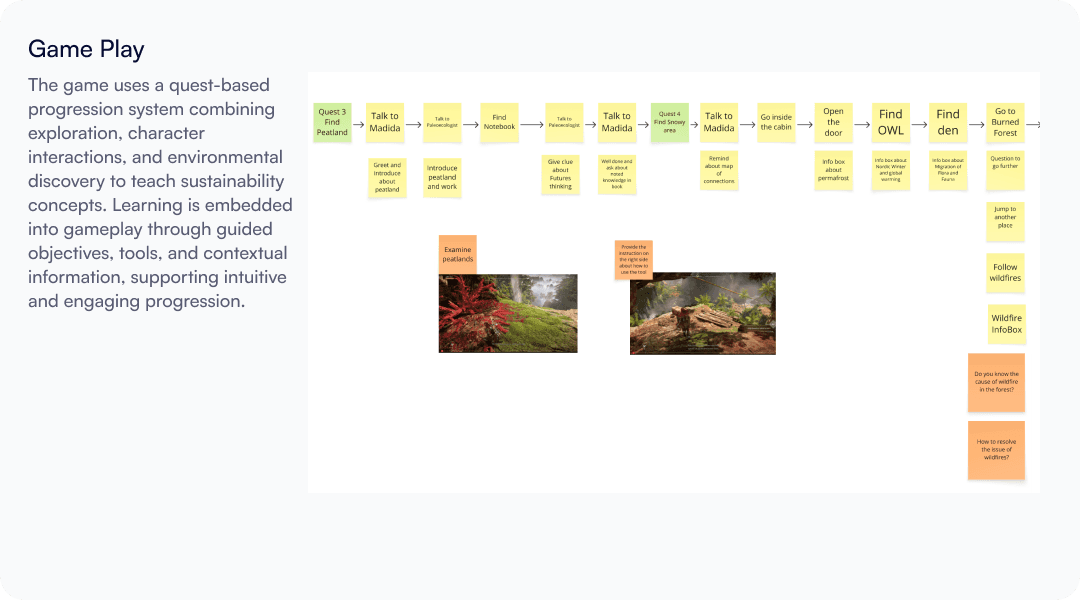
The game is about the world of Serendip, a virtual place grounded in reality where the player gets to practice different sustainability competencies through unique experiences.
Game Debugging and Testing
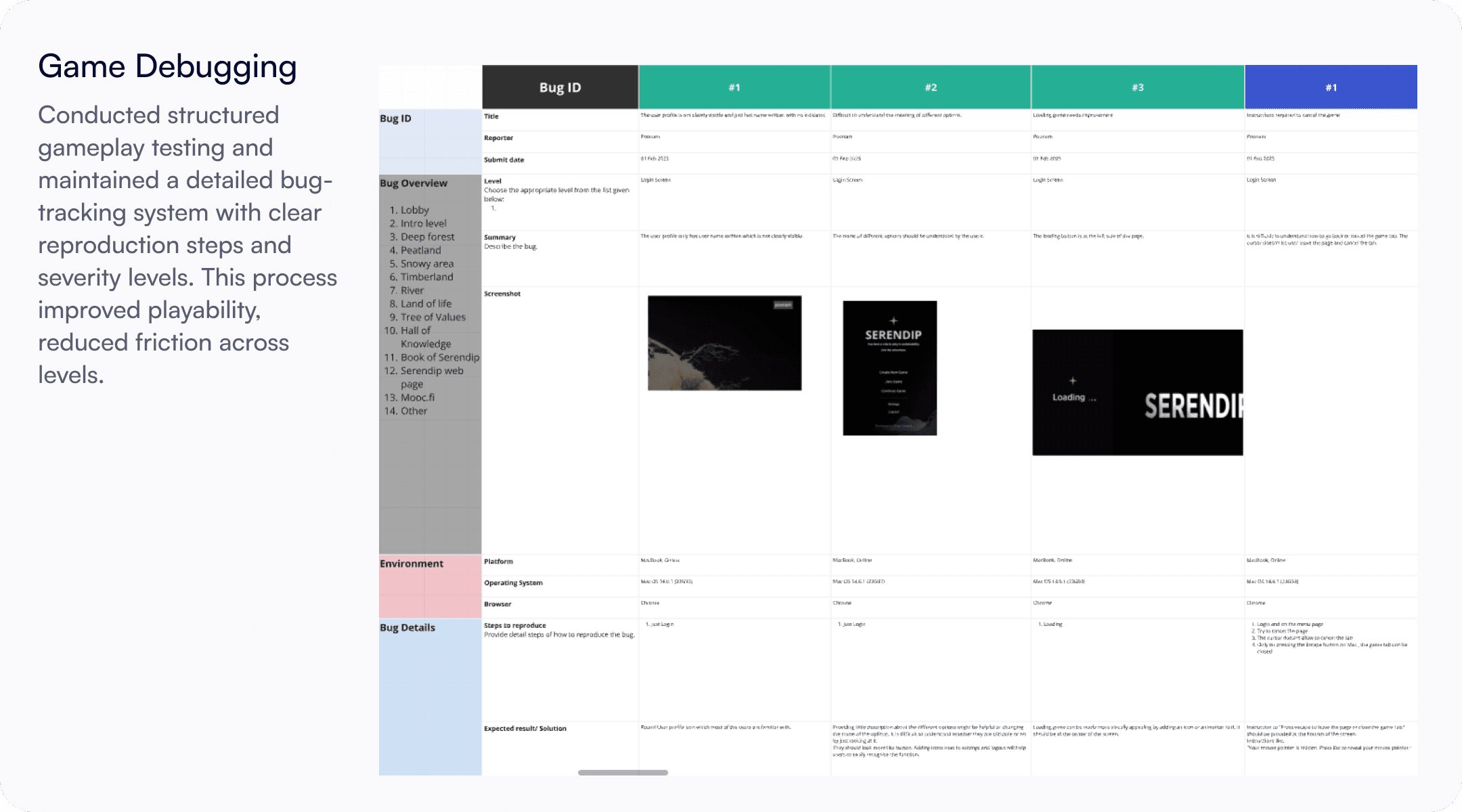
As part of the game development and quality assurance process, I conducted bug reporting to help identify and resolve issues affecting gameplay, user experience, and educational functionality. Bugs were documented using a standard format so developers can reproduce and fix them. The game was tested across multiple platforms such as Chrome, Firefox, Safari, and Brave browsers to ensure compatibility and cross-browser stability.
Design Process
Starting from the existing game build, I conducted a full UX audit to identify friction points across gameplay, onboarding, and interaction design. Using the Environmental Game Design Playbook as a framework, I restructured the game's information hierarchy, redesigned key interaction patterns like the wisdom card system and Owl chatbot, and introduced progress tracking and achievement badges. Each change was validated through structured gameplay testing across multiple browser platforms before being implemented into the build.
UX Issues Identified
Typography Errors: Spelling mistakes, inconsistent fonts, poor readability in dialogue and UI.
Software-Related Errors: Crashes, lags, and compatibility issues across different browsers or systems.
NPC Behavior Errors: NPCs not responding, getting stuck, or not following intended movement/interaction logic.
Quest Trigger Errors: Quests not starting or completing properly due to broken triggers or missing conditions.
Settings and Menu Issues: Menu text is hard to read, layout is confusing, and options are not clearly accessible.
Icon Visibility Issues: Icons in the game environment are blend into the background.
Chatbox Design Problems: Chat UI is not user-friendly and text is unreadable or overlaps.
Lobby Environment Issues: The game lobby contains unrelated or out-of-context items.
Key Improvements
Improved the game onboarding experience by resolving usability issues in the Menu and Sustainability page.
Info icons were replaced by wisdom Cards in the game to make learning more engaging. When a player approaches a wisdom Card, it flips with an animation and sound, revealing an image and title. At the same time, a related info box appears on the right side of the screen, delivering key knowledge.
Improved AI-powered chatbot Owl experience.
Implemented a progress indicator to help players track the number of tasks completed and maintain motivation.
Enhanced gameplay and engagement by introducing achievement badges. These badges motivate players to engage in learning, exploration, curiosity, and meaningful AI interaction, making the gameplay experience more rewarding, goal-driven, and personally memorable.
Learnings applied from Environmental Game Design Playbook
For a game to create transformation, we had the additional challenge of understanding how to affect change in the audience. The transformation goals we wish to achieve,
Knowledge: The player knows something new or has a different understanding as a result of gameplay.
Disposition (Affect): The player’s feelings or sentiment has changed.
Experience: The player’s personal contact with and/or observation of truths or events have changed.
Behavior: The player acts in a new way.
Identity: The player’s sense of self has changed.
Barriers for the players of the game,
Motivation: The player doesn’t think going through the game is worth doing.
Complexity: The player is overwhelmed by the scope, information, and/or topic of the game.
Feelings players need to have during the game,
Achievable: Players should be able to learn how to perform well in the game. The behavior encouraged should be specific, possible, and easy to practice in real life.
Challenging: The task provided should require some effort (that the player feels is appropriate for their comfort and/or skill level).
FINAL DESIGNS
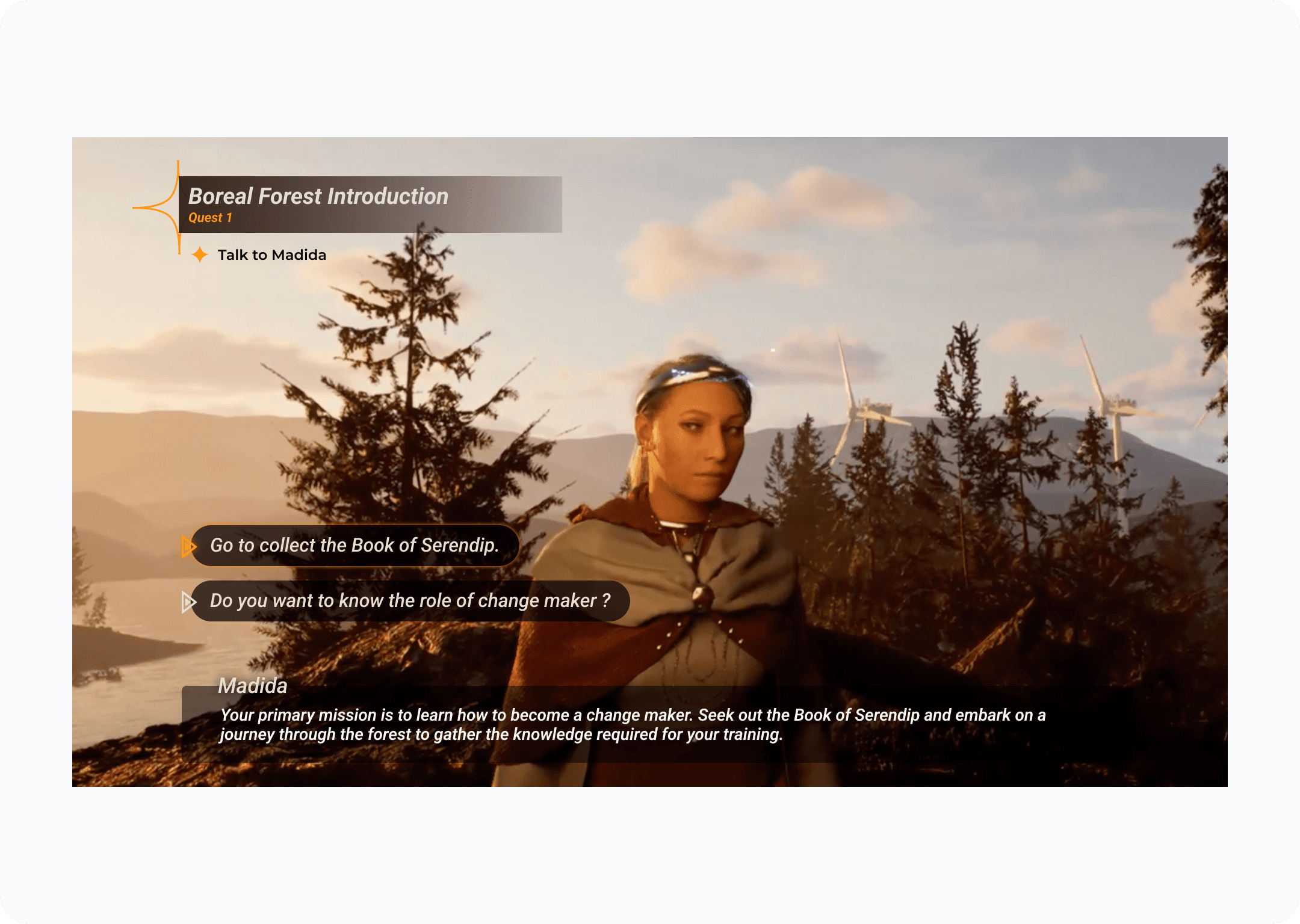
Narrative-Driven Quest Interface for Sustainability Learning
A story-driven quest screen introduces sustainability concepts through guided objectives and character interaction, balancing immersion with clear, goal-oriented UI to support effective onboarding and learning.
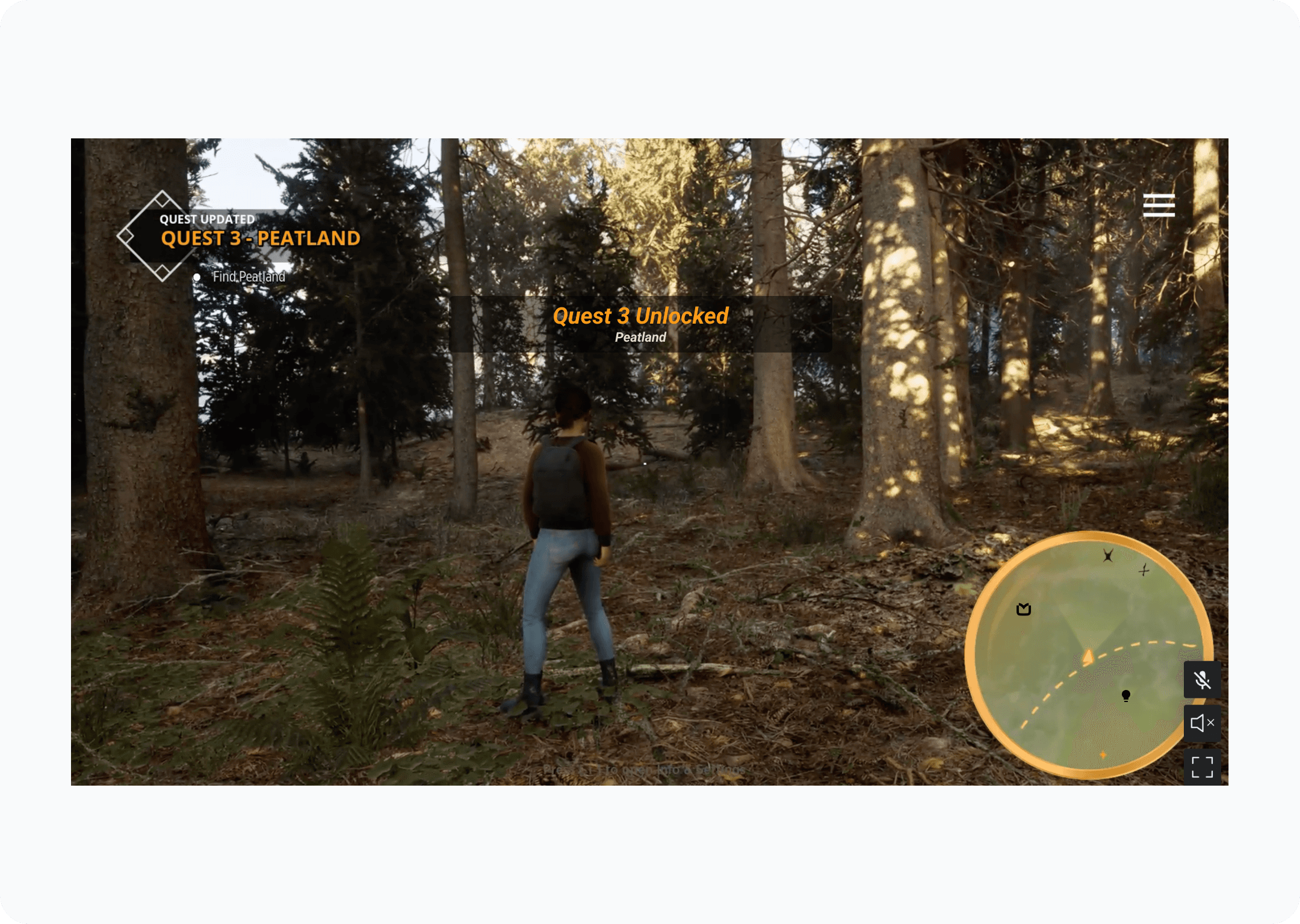
Quest Progression & Environmental Navigation UI
A minimal HUD highlights quest progression and objectives while using a focused minimap for clear navigation, maintaining immersion, and supporting exploration-based learning.
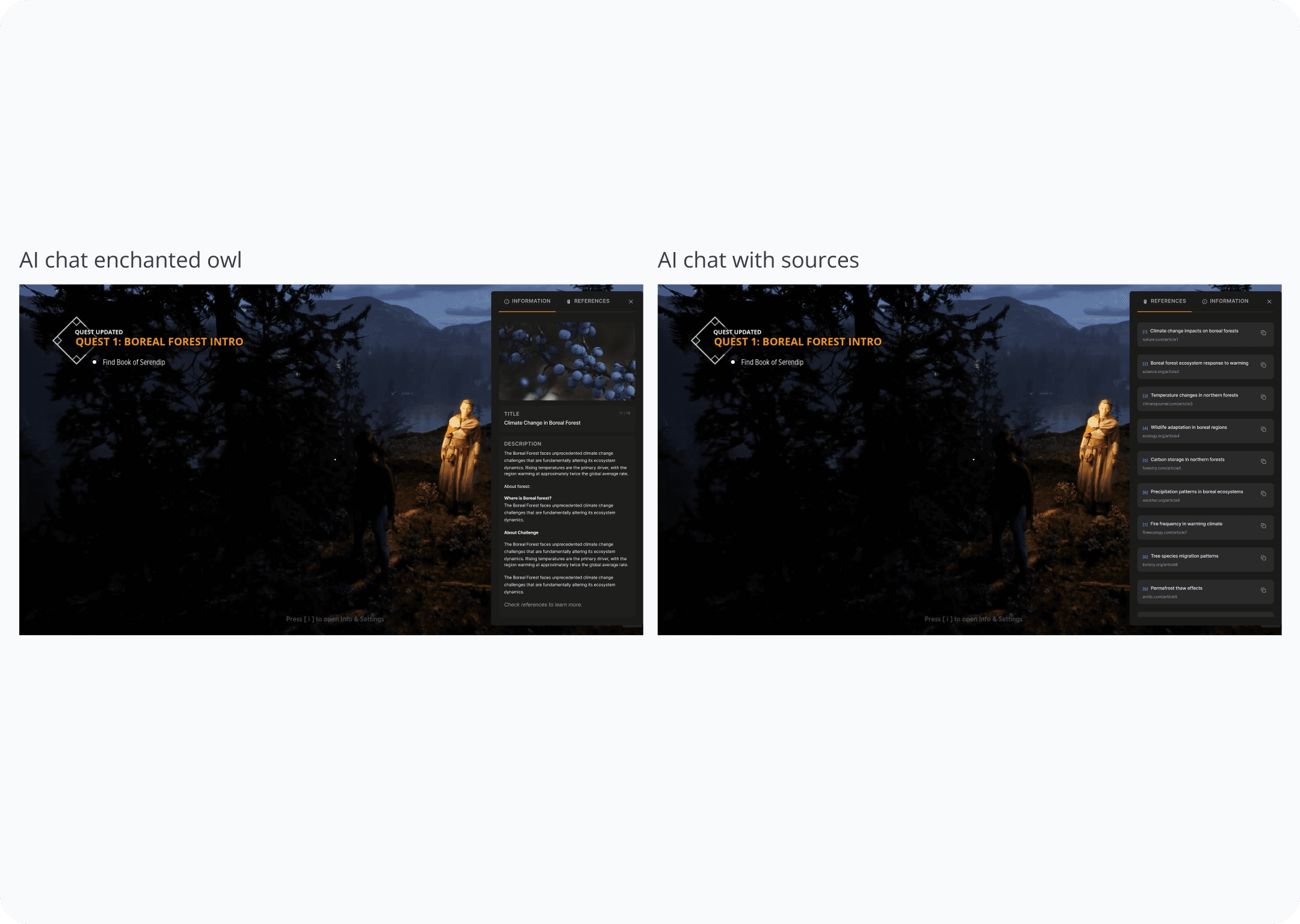
Proximity-Based Knowledge Card Interaction
Knowledge cards are embedded directly into the game world; as players approach, the card flips to reveal contextual sustainability-related information. This proximity-based interaction encourages exploration while delivering information and references without breaking immersion.
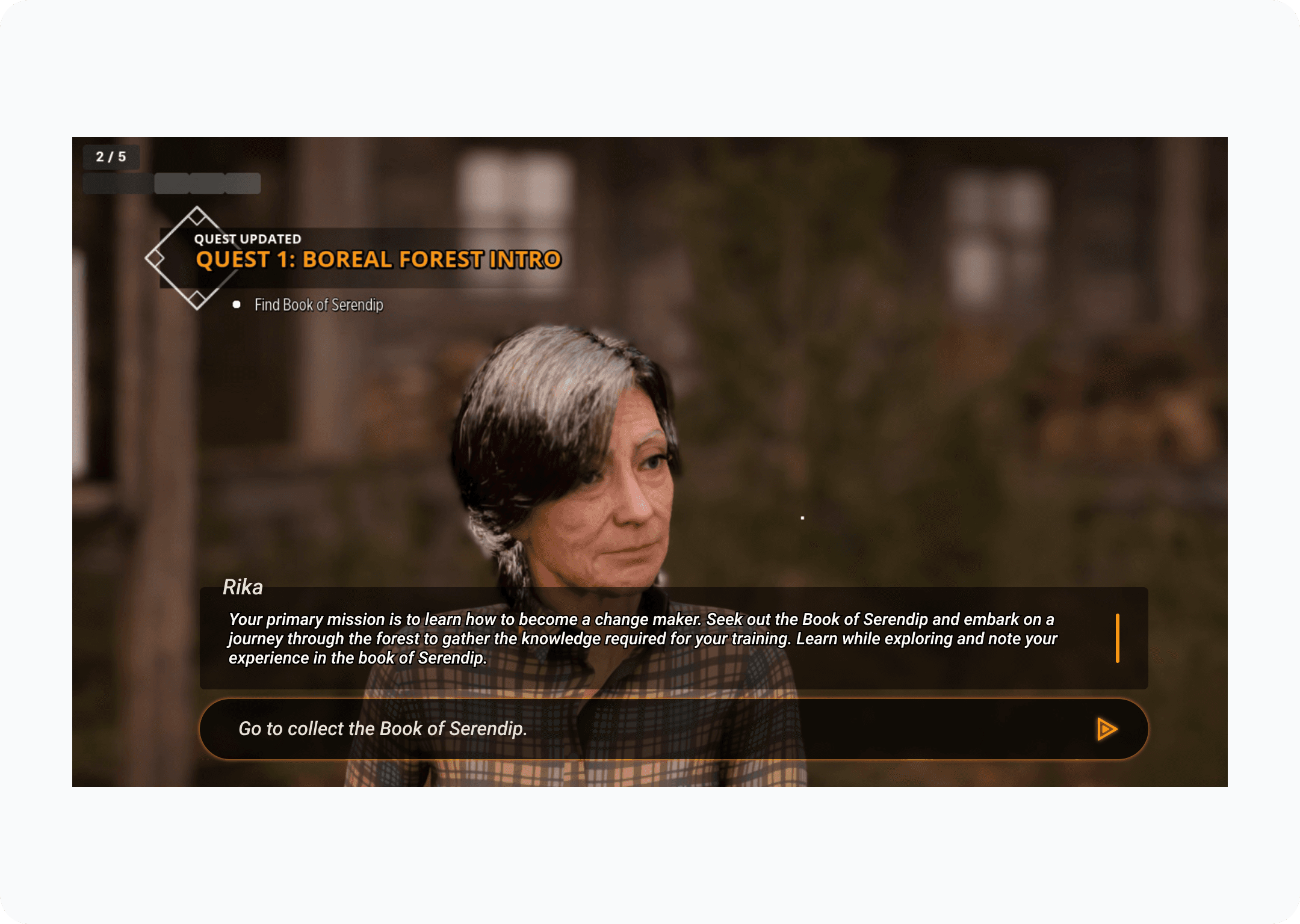
Chat with AI Character
Players interact directly with AI-driven characters and learn through contextual conversations. Each character is built with a defined background, profession, and personality, ensuring that every interaction stays relevant to their role within the game.
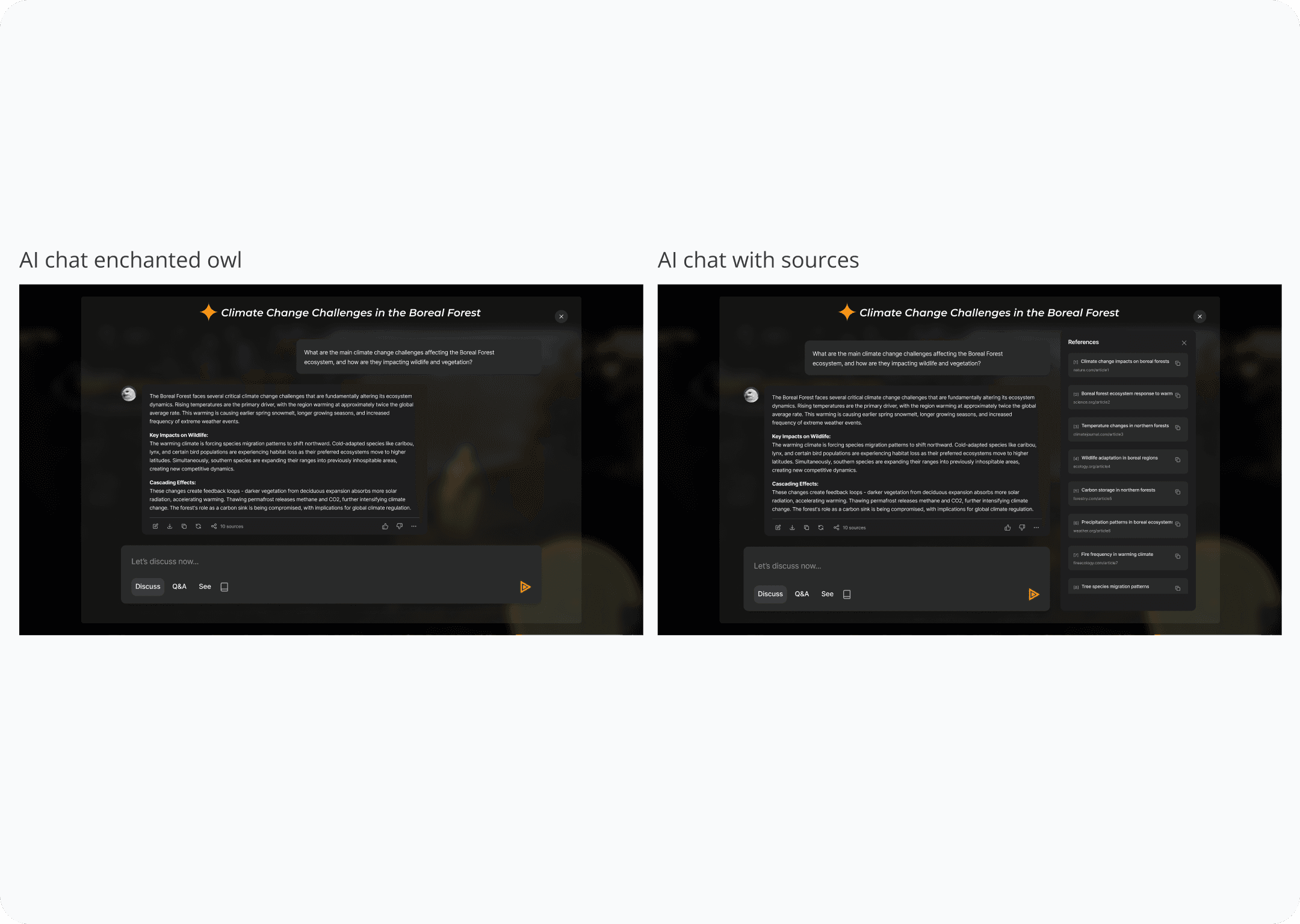
Chat with enchanted owl character
Players can chat with the in-game Owl to explore real-world challenges in the boreal forest. Acting like an in-game AI mentor, the Owl provides contextual knowledge and referenced insights, similar to how ChatGPT delivers informed answers.
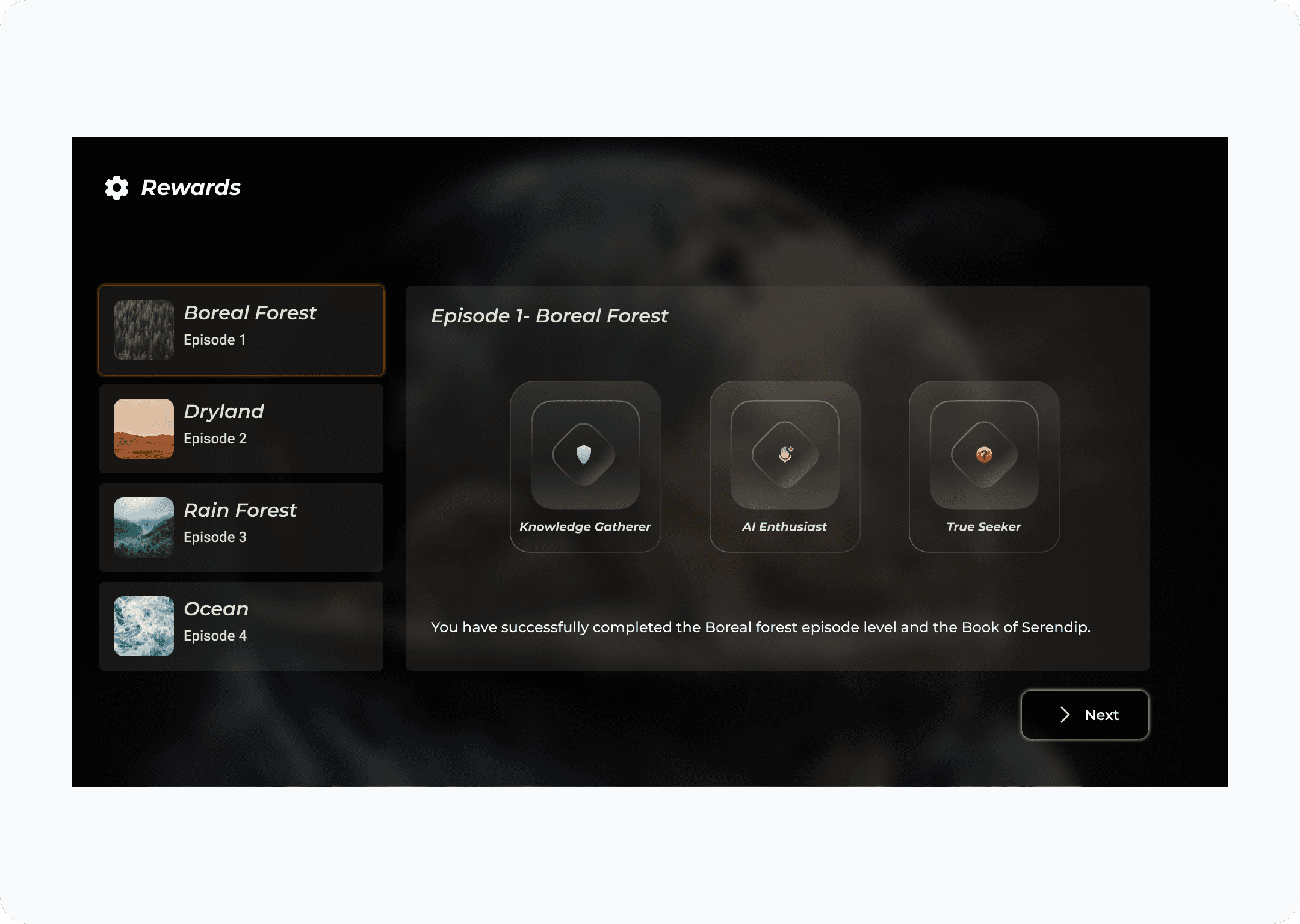
Episode Completion & Rewards UI
A post-episode screen that reinforces progression through intrinsic rewards and clear episode structure, helping players reflect on learning achievements and smoothly transition to the next module.
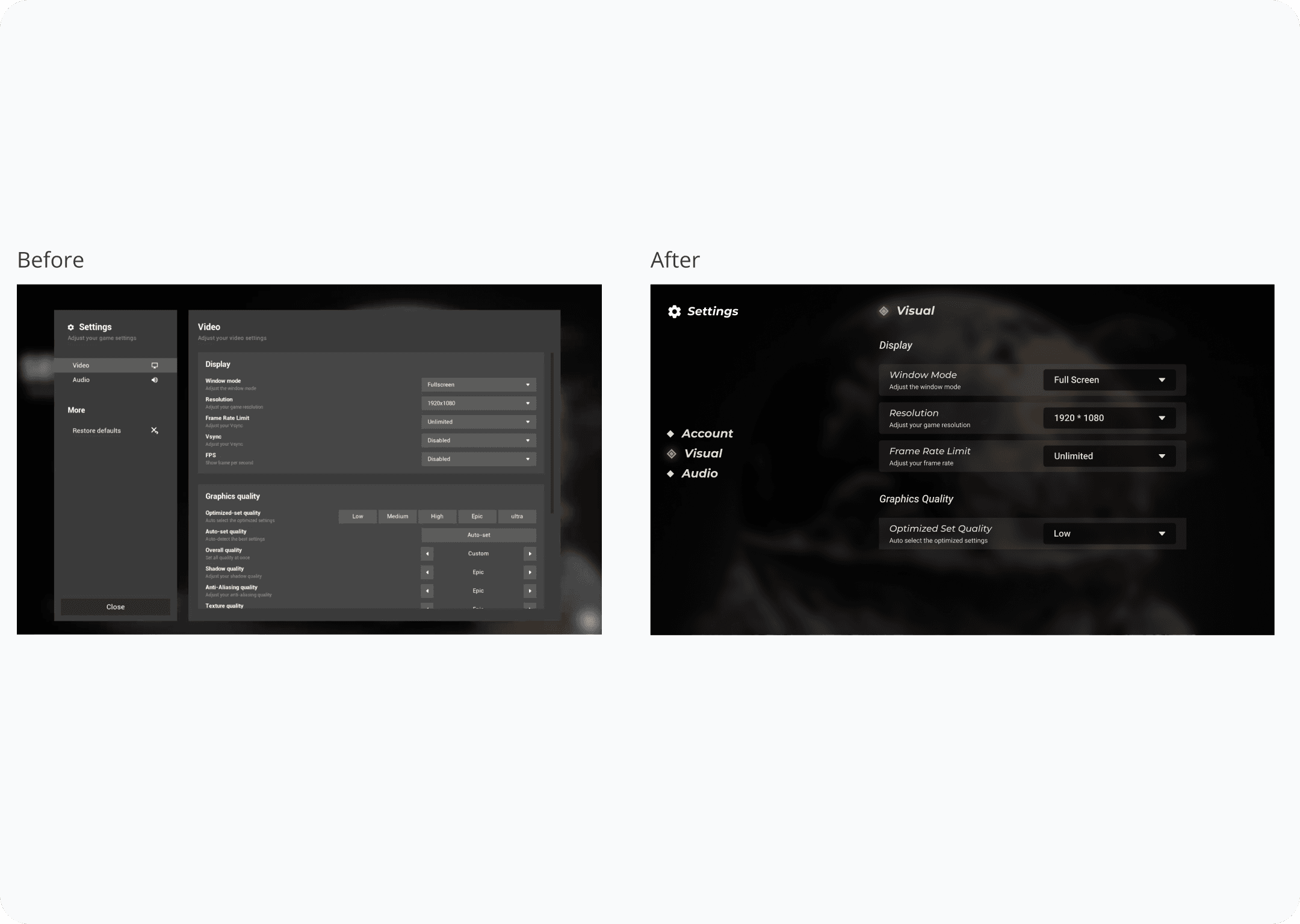
Settings UI Redesign: Improving Clarity, Focus, and Usability
The settings interface was redesigned to reduce cognitive load and improve usability. The original layout surfaced too many technical options. The updated design introduces clearer hierarchy, intent-based grouping, and simplified visual settings for students.
Learnings
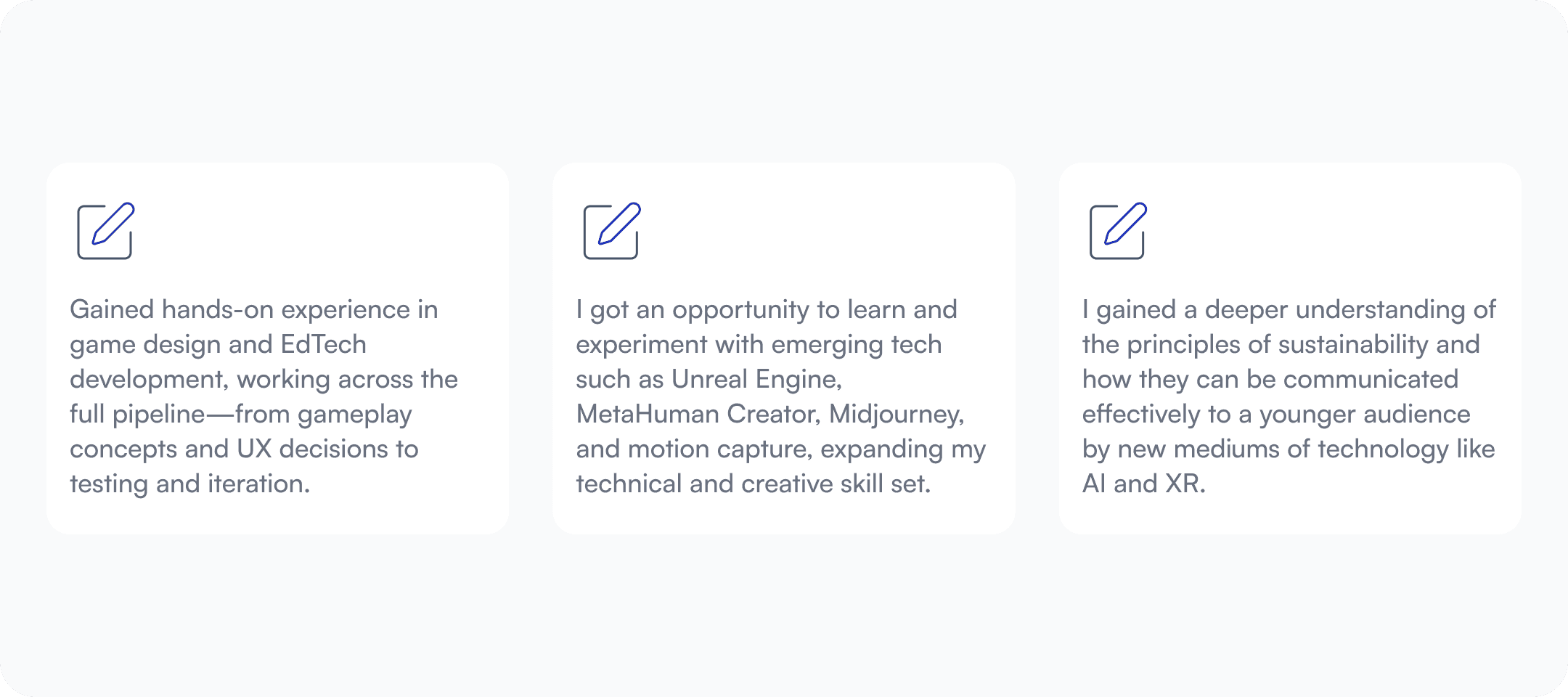
Most importantly, I developed a stronger perspective on designing for impact—using game design and immersive media to make abstract ideas accessible, meaningful, and engaging for learners.
Awards & Recognition
Best Creative Use of AI, AI Finland Awards
Best XR Prototype Demo, VRINN Awards Nominee
XR for a Cause, LAVAL Virtual Awards Nominee
Best Use of Generative AI, QS Reimagine Education Awards Nominee